
Fairfax Chapter
#5395 Fairfax Virginia
#5395 Fairfax Virginia
Hand Signals v2
The goal of hand signals is to enhance the safety of the group ride, which thereby enhances the ride experience itself. Though Road Captains are responsible for sending hand signals back, each group rider is responsible for identifying what they are and what they intend to communicate, otherwise subsequent riders may not fully grasp ride expectations.
There are a variety of hand signaling methods within the group riding community, but it is important to recognize that National H.O.G.® does not prescribe a specific technique or procedure. Each Chapter can define their own hand signals as they see fit. Nevertheless, the foundation of F.H.O.G.’s hand signals come from the best practices of the Motorcycle Safety Foundation®. All signals, unless explicitly stated, are to be passed back by all riders in a group.
All hand signals can be found on the Group Riding Handbook: https://hogscan.s3-us-west-2.amazonaws.com/5395/s3fs-public/road_captain...
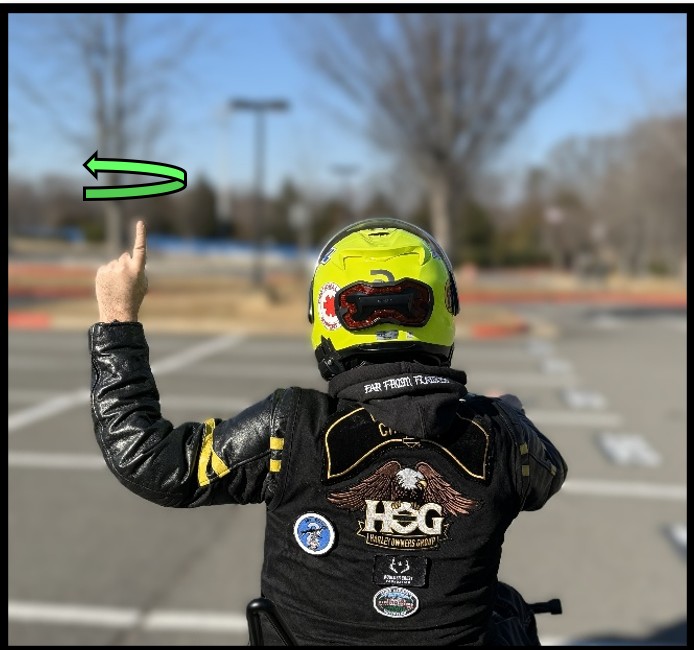
START ENGINES / GET READY TO GO
One finger pointing up (right or left hand) with the arm rotating around an axis.
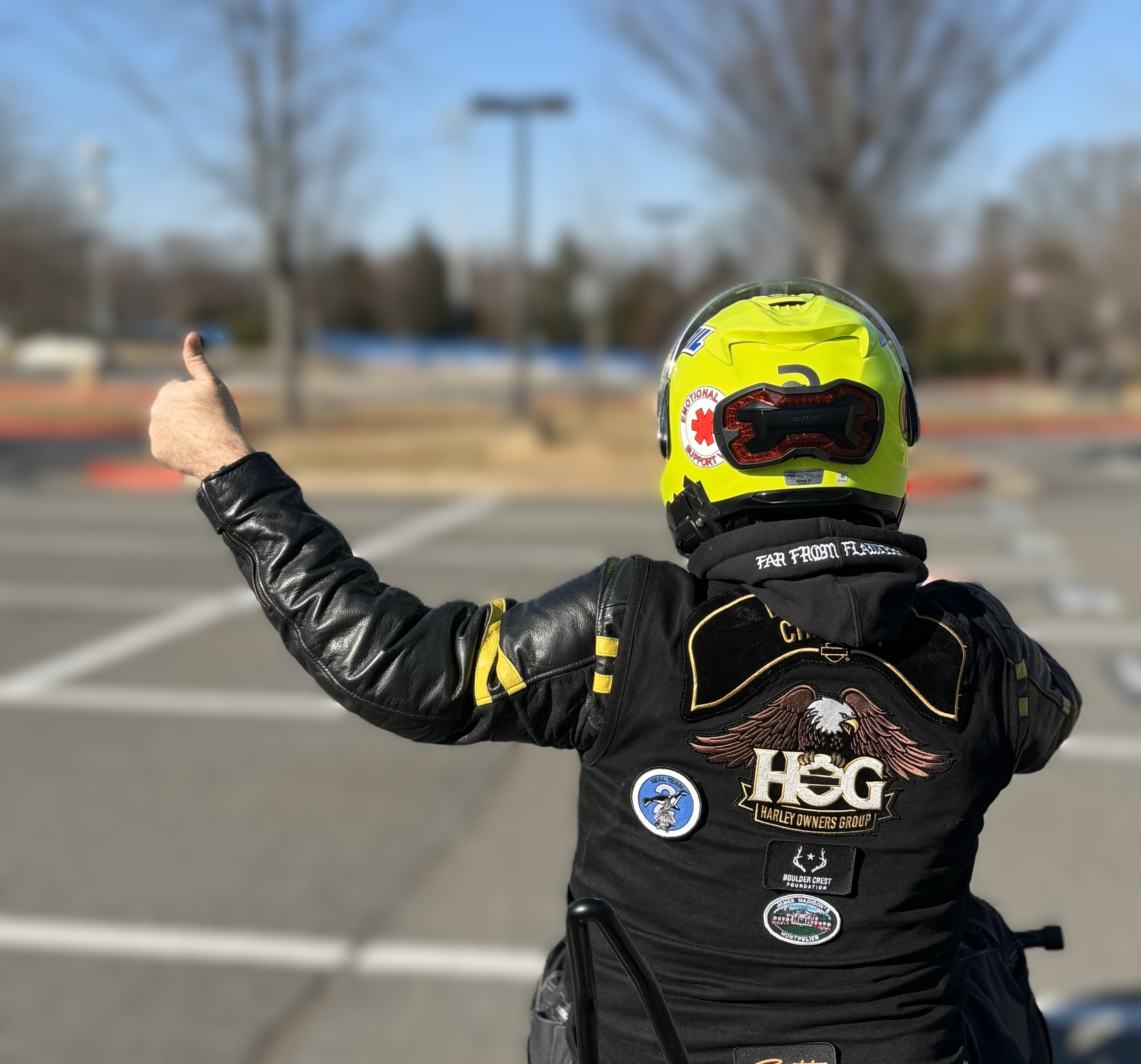
READY TO GO
Outstretched arm with thumbs up.
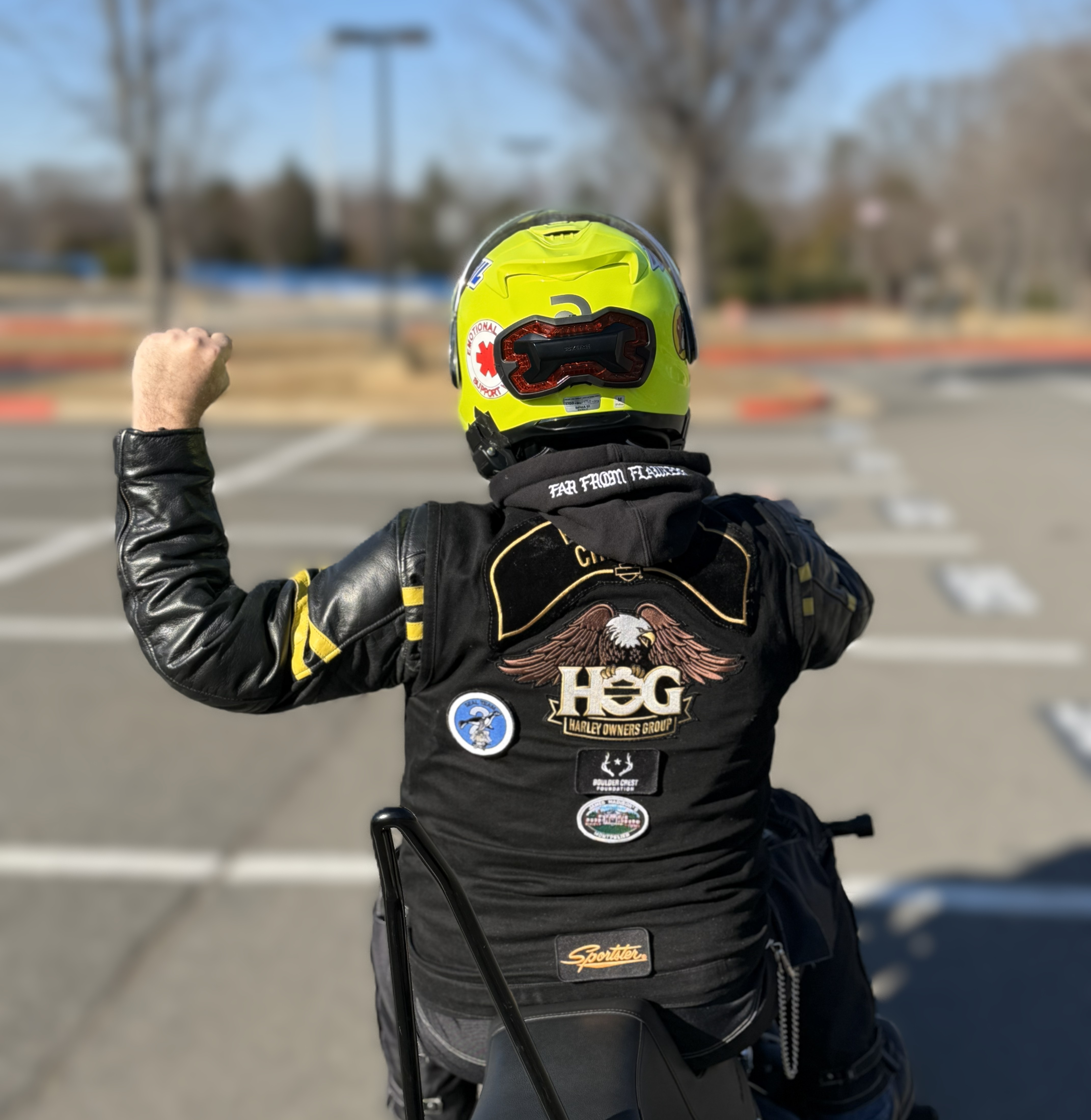
RIGHT TURN
Left arm raised at a 90° angle from the body with the hand in a fist.
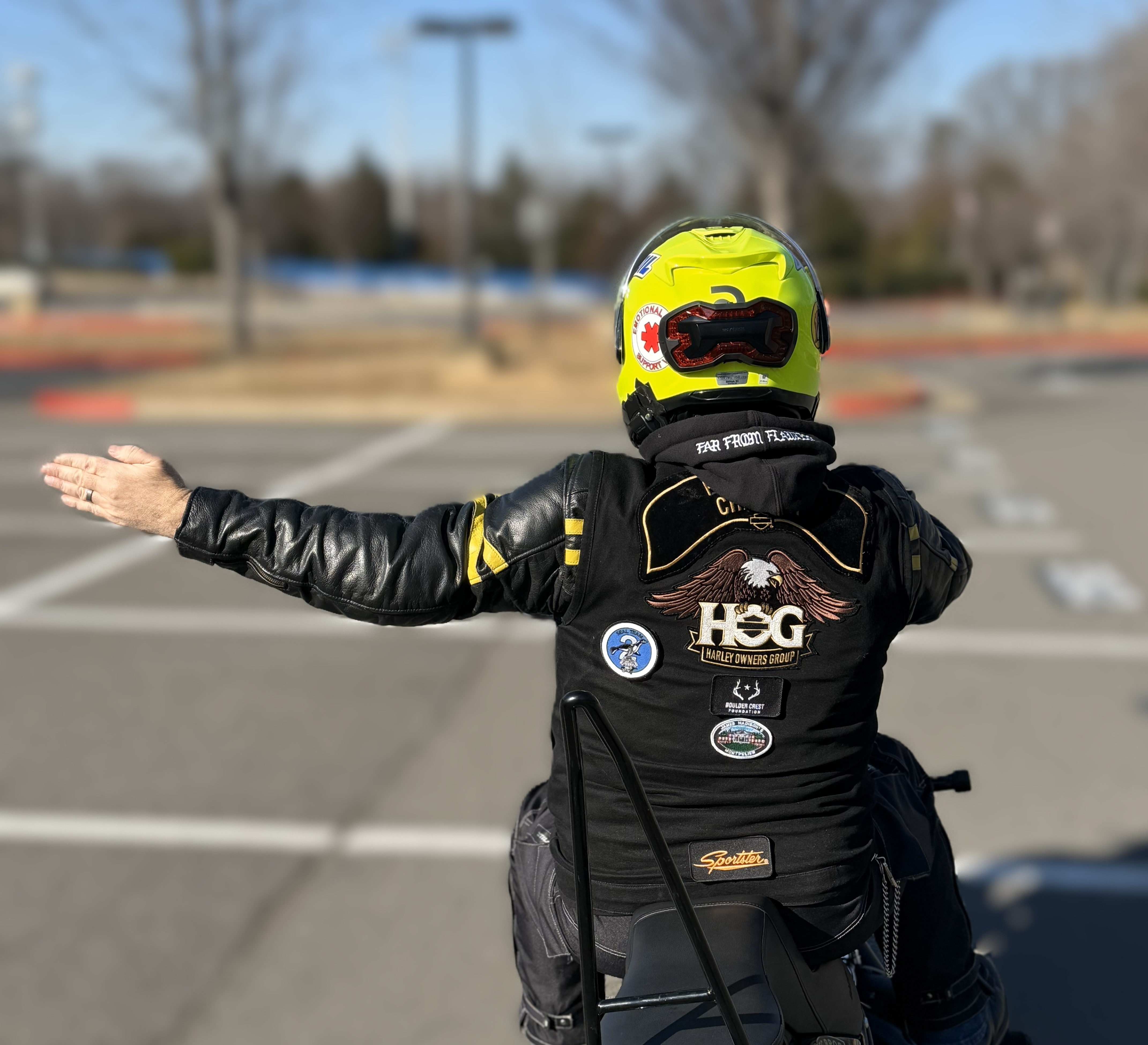
LEFT TURN
Left arm extended to the left at a 180° angle from the body with the hand stretched out with fingers together.
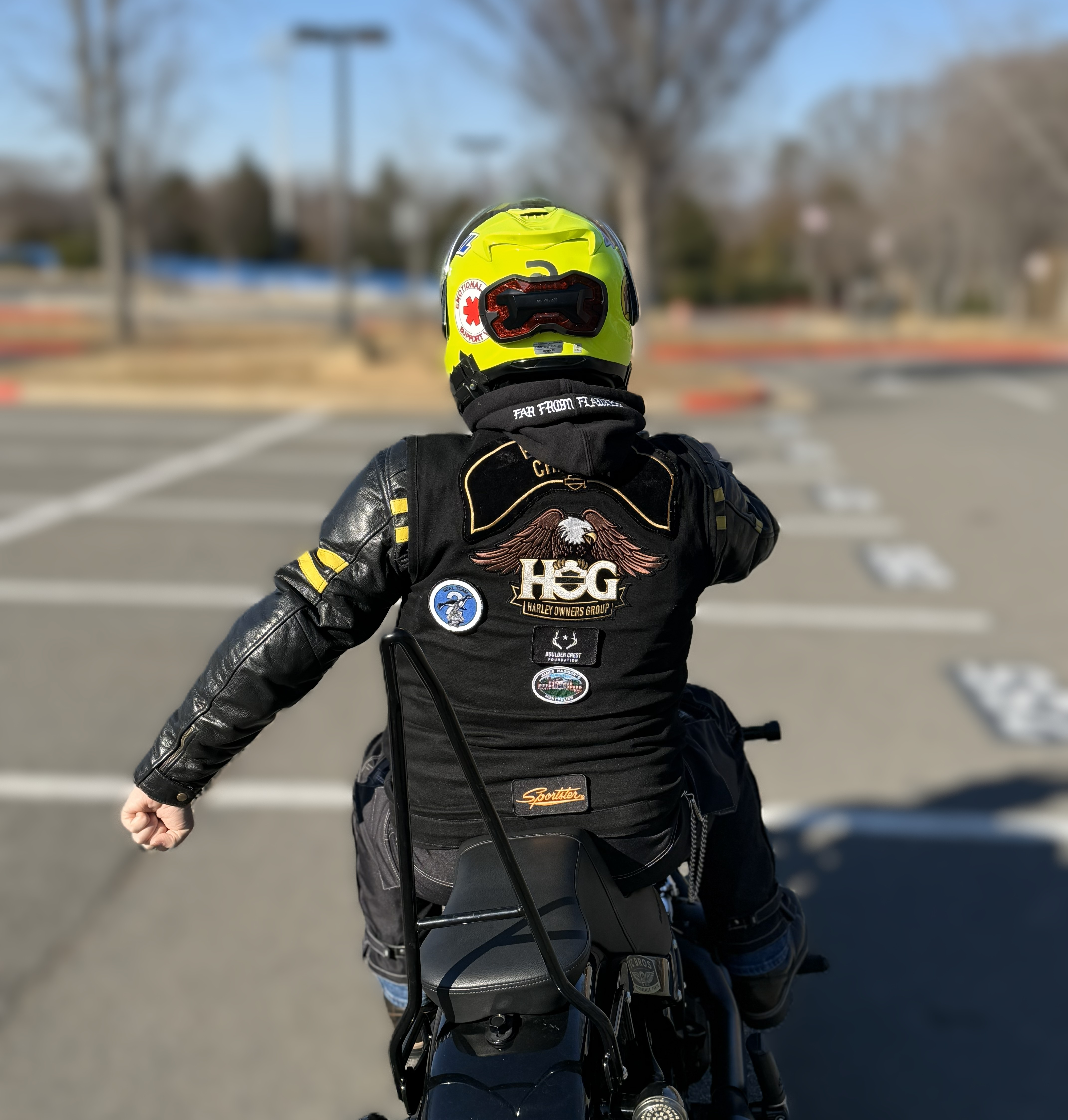
HOLD POSITION
Left arm extended to the left at a 210° angle from the body with the hand in a fist, palm toward the aft.
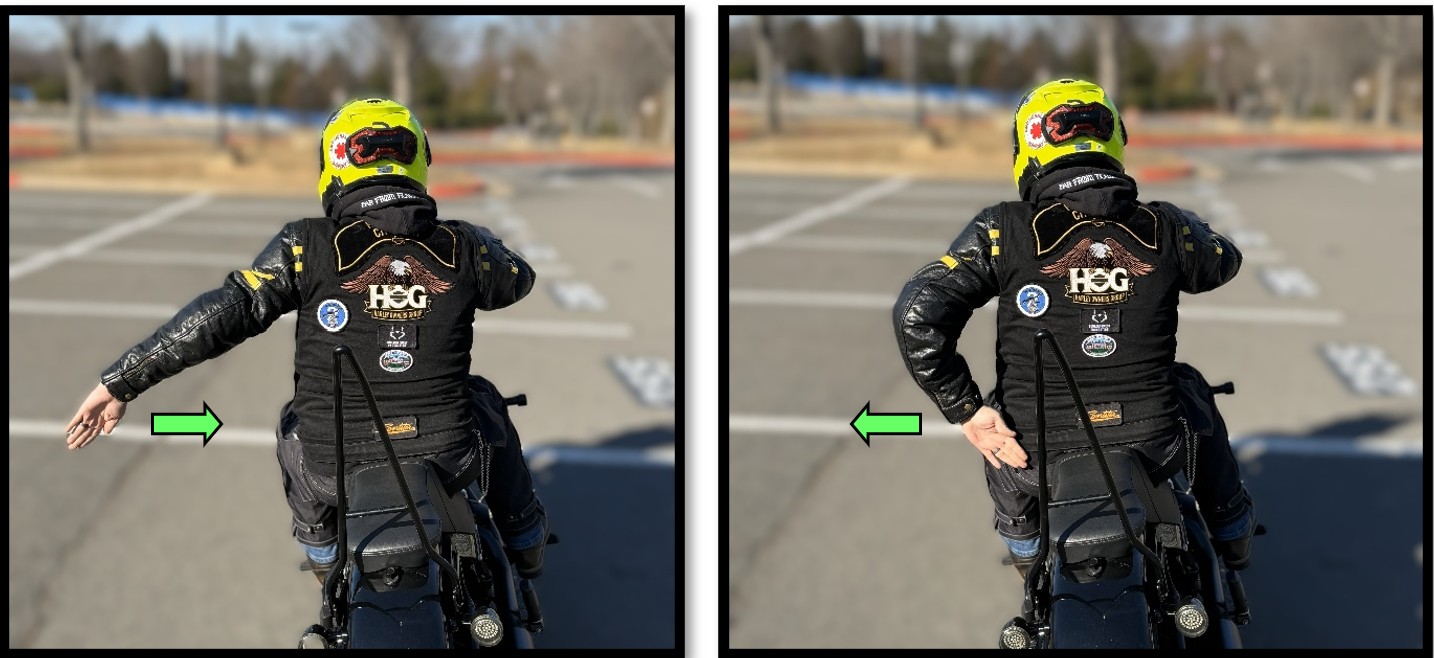
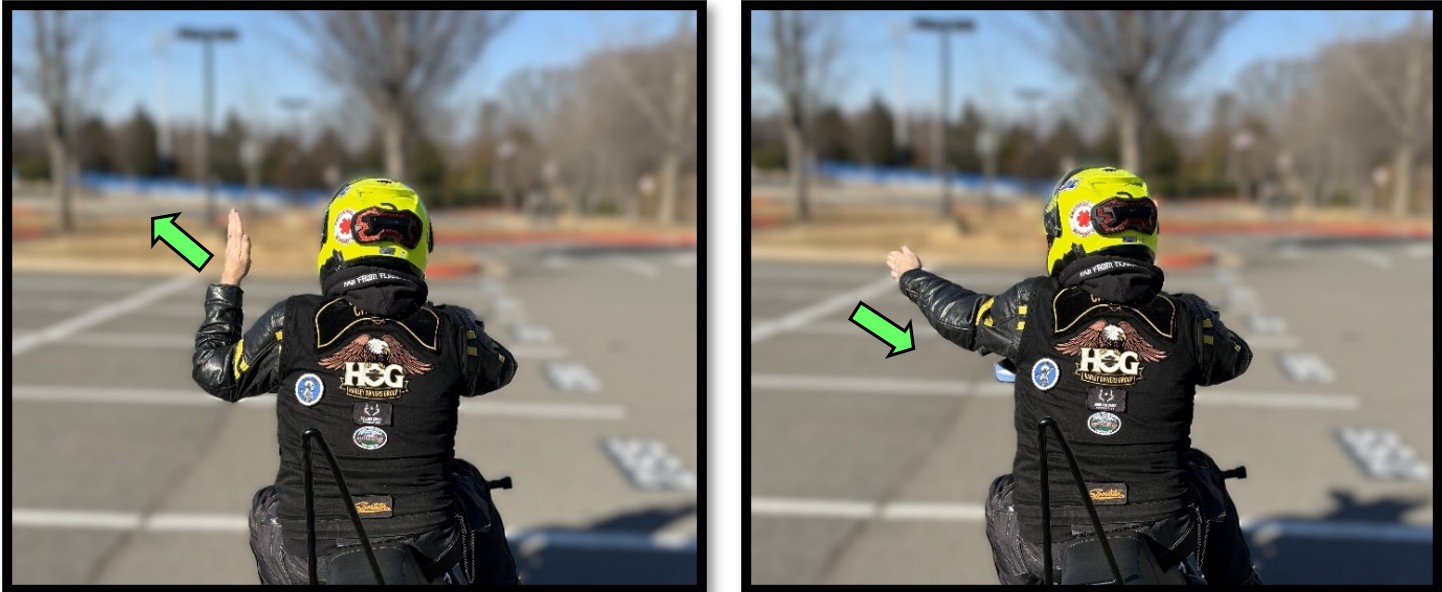
CHANGE LANES
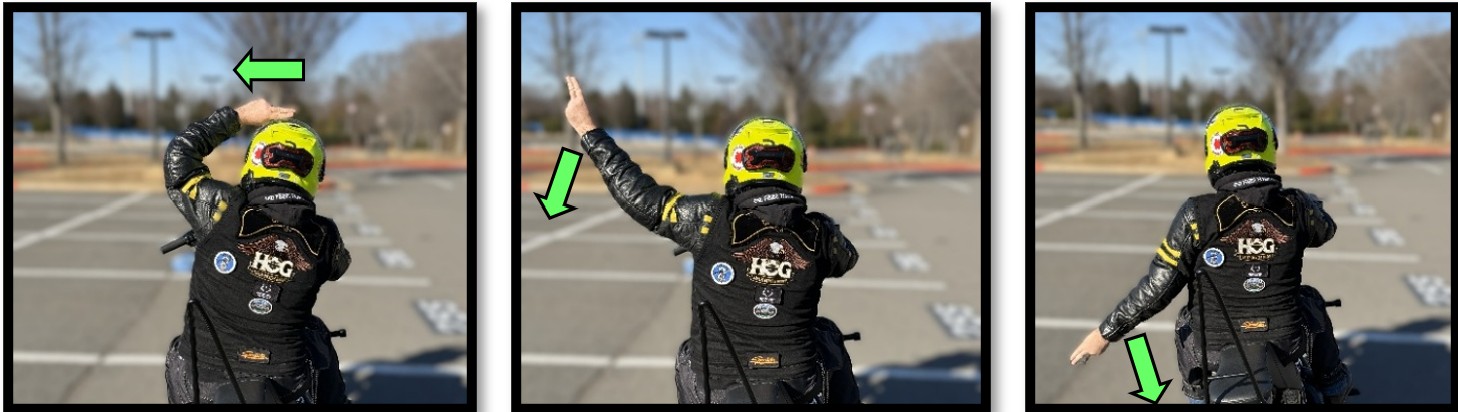
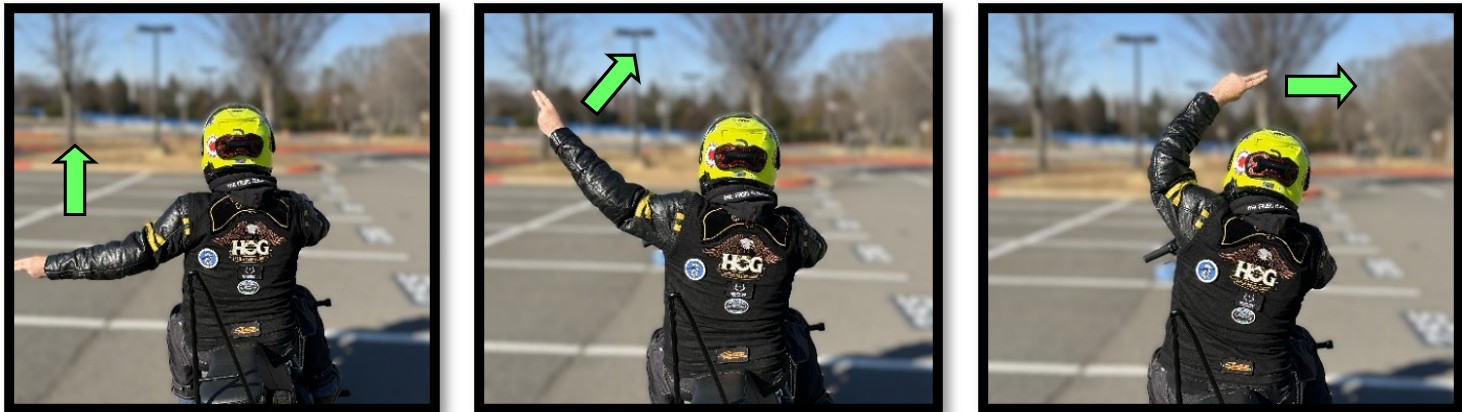
Large, smooth, sweeping action by the left arm to either the left or the right. The Road Captain provides this signal to change lanes.
Note: This is the only hand signal that is not passed back by the rest of the group.
Lane Change to the Left
Lane Change to the Right
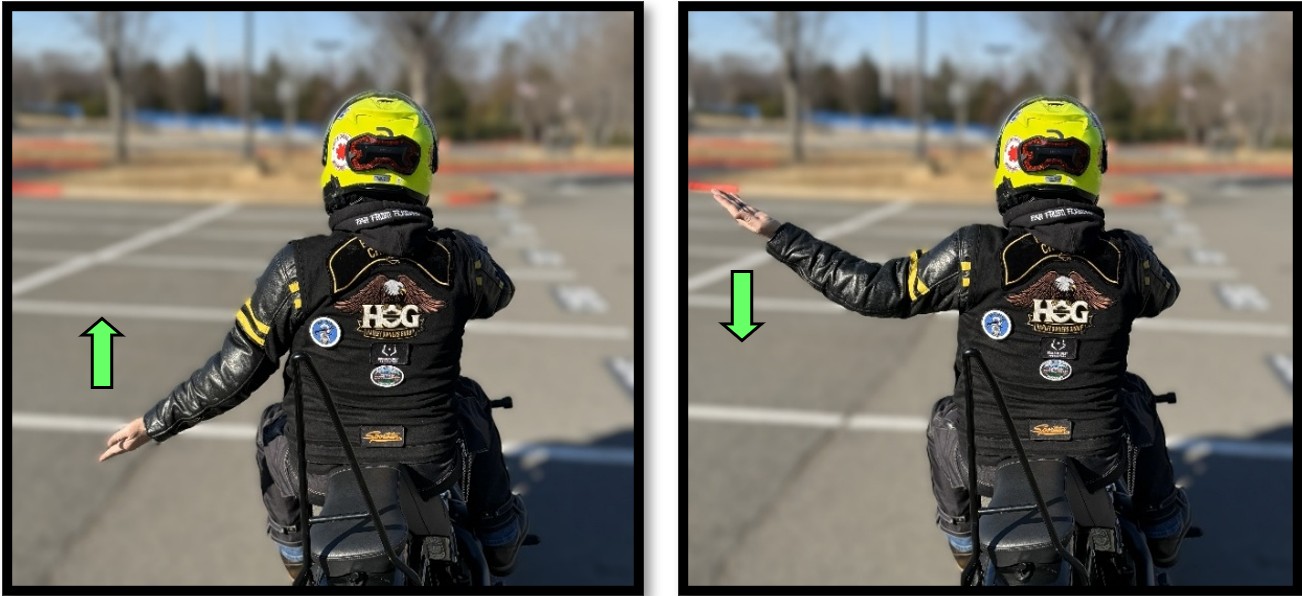
SLOW DOWN
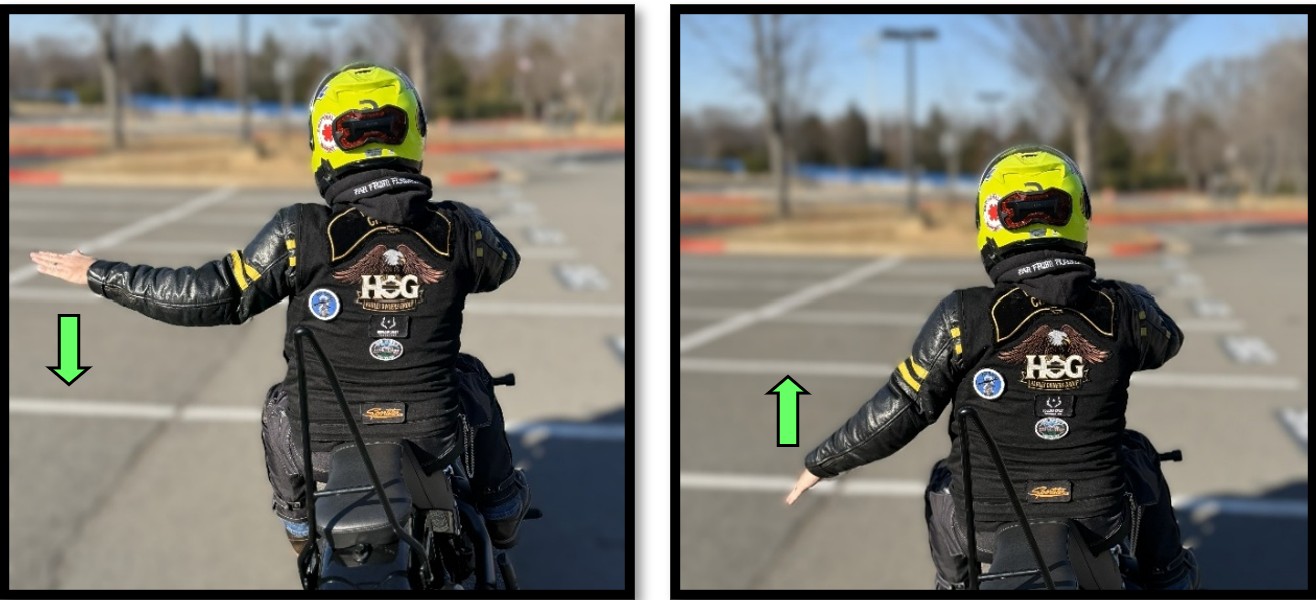
Left arm extended to the left at a 210° angle from the body with the palm of the hand facing downward, moving up and down at a smooth pace.
SPEED UP
Left arm extended to the left at a 210° angle from the body with the palm of the hand facing upward, moving up and down at a smooth pace.
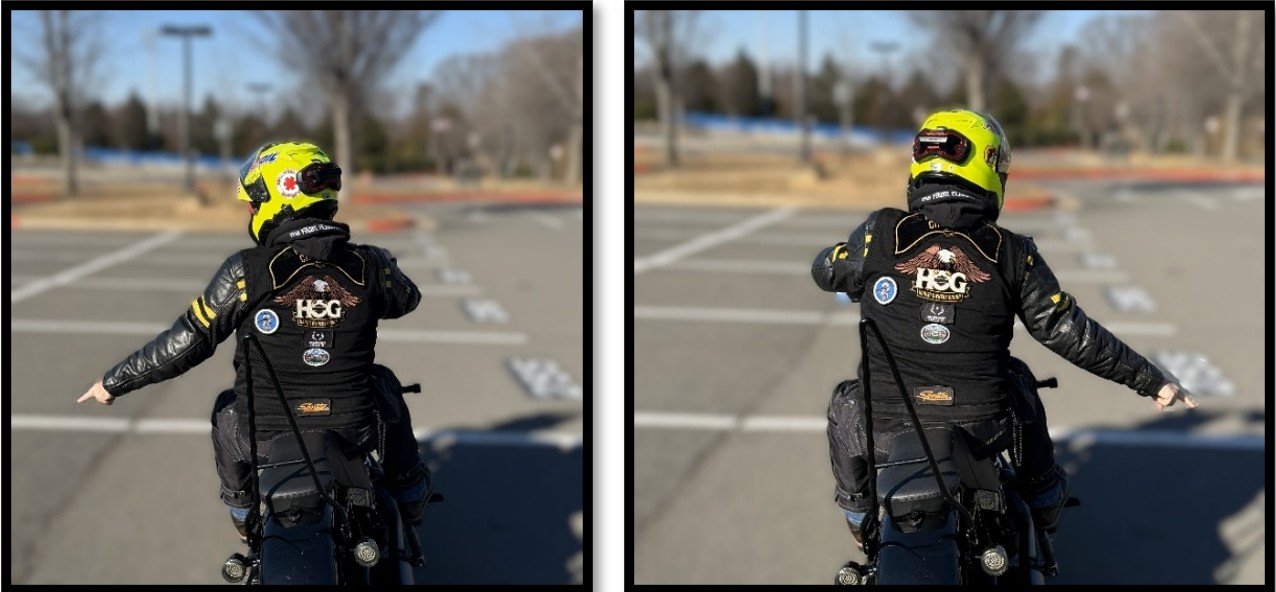
HAZARDS
Option A: Extend right or left leg and point with the heel to which side of the channel the upcoming hazard is.
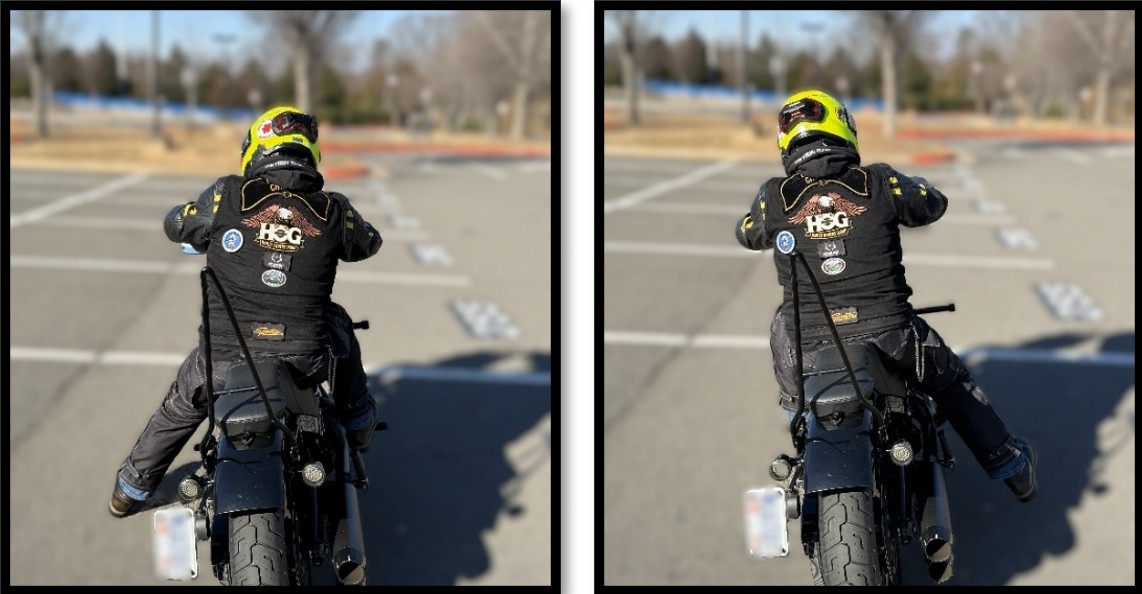
Option B: Extend right or left arm and point with the finger to which side of the channel the upcoming hazard is.
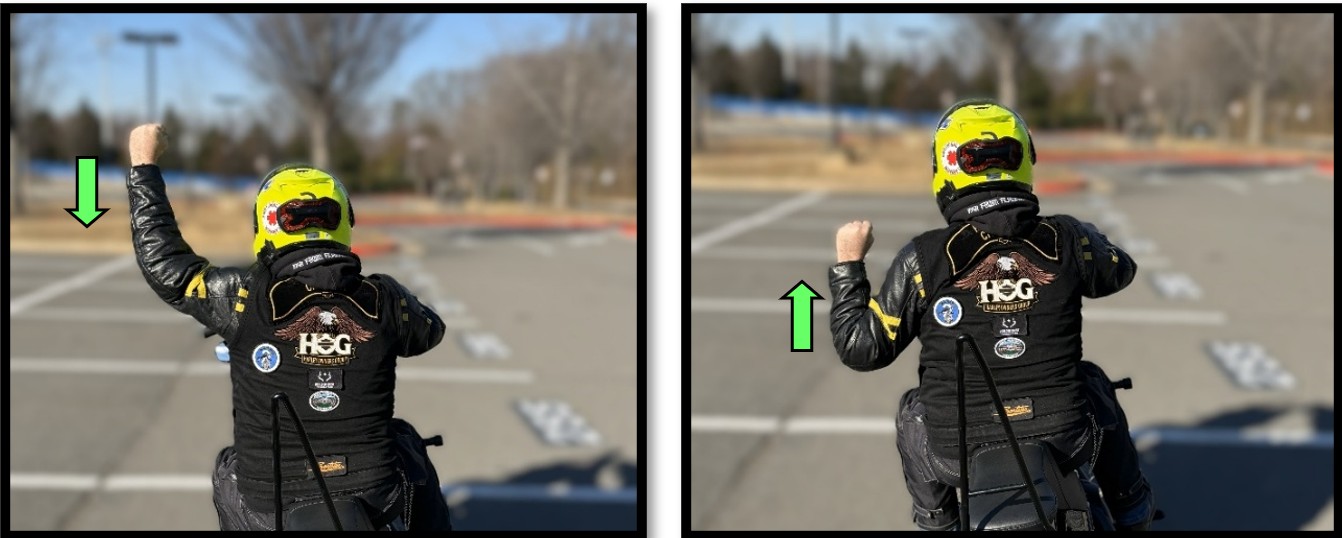
TIGHTEN UP
Left arm raised at a 90° angle from the body with the hand in a fist, moving up and down at a smooth pace.
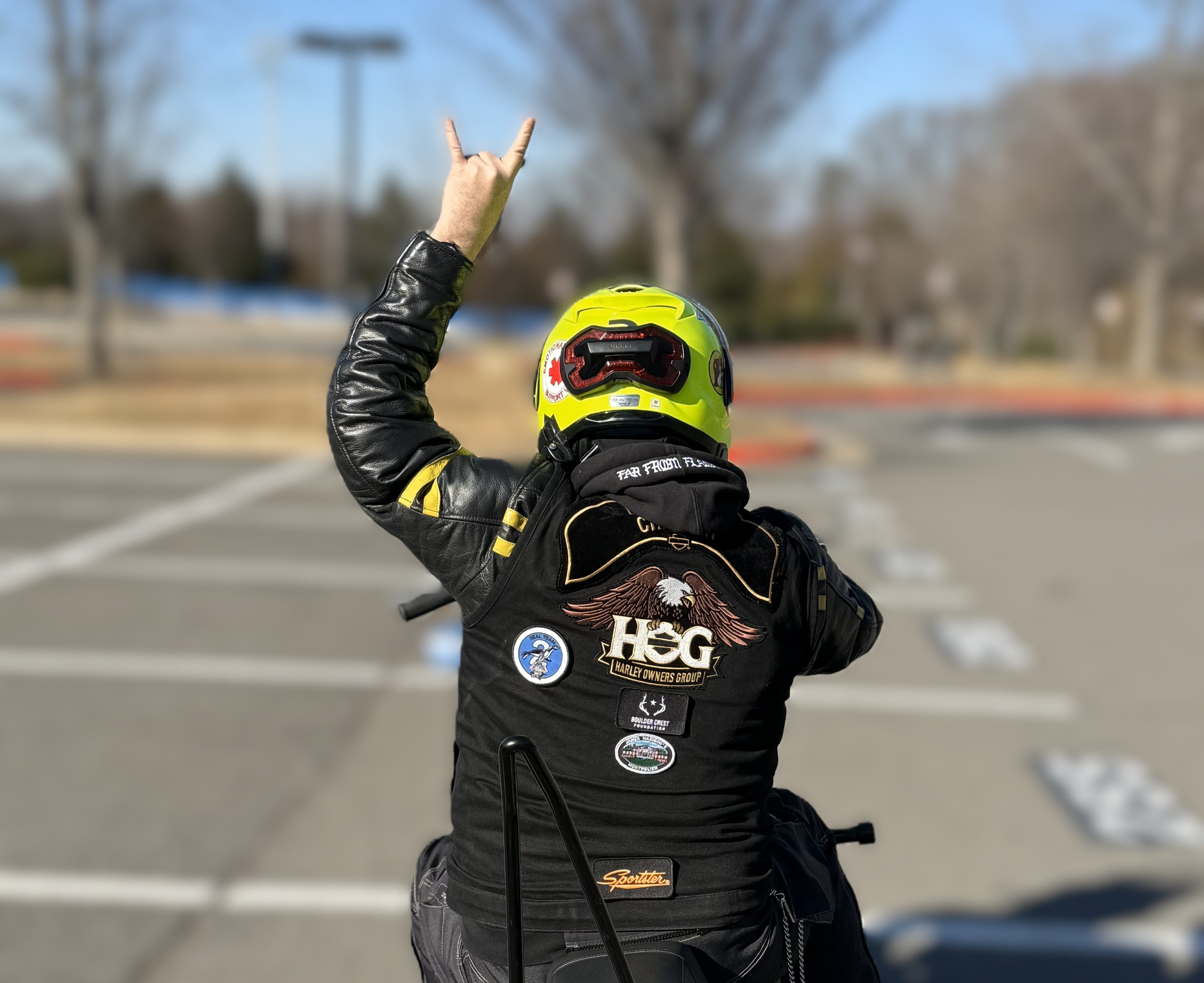
STAGGERED FORMATION
Left arm raised straight up from the body with the left hand showing the index and pinky fingers extended.
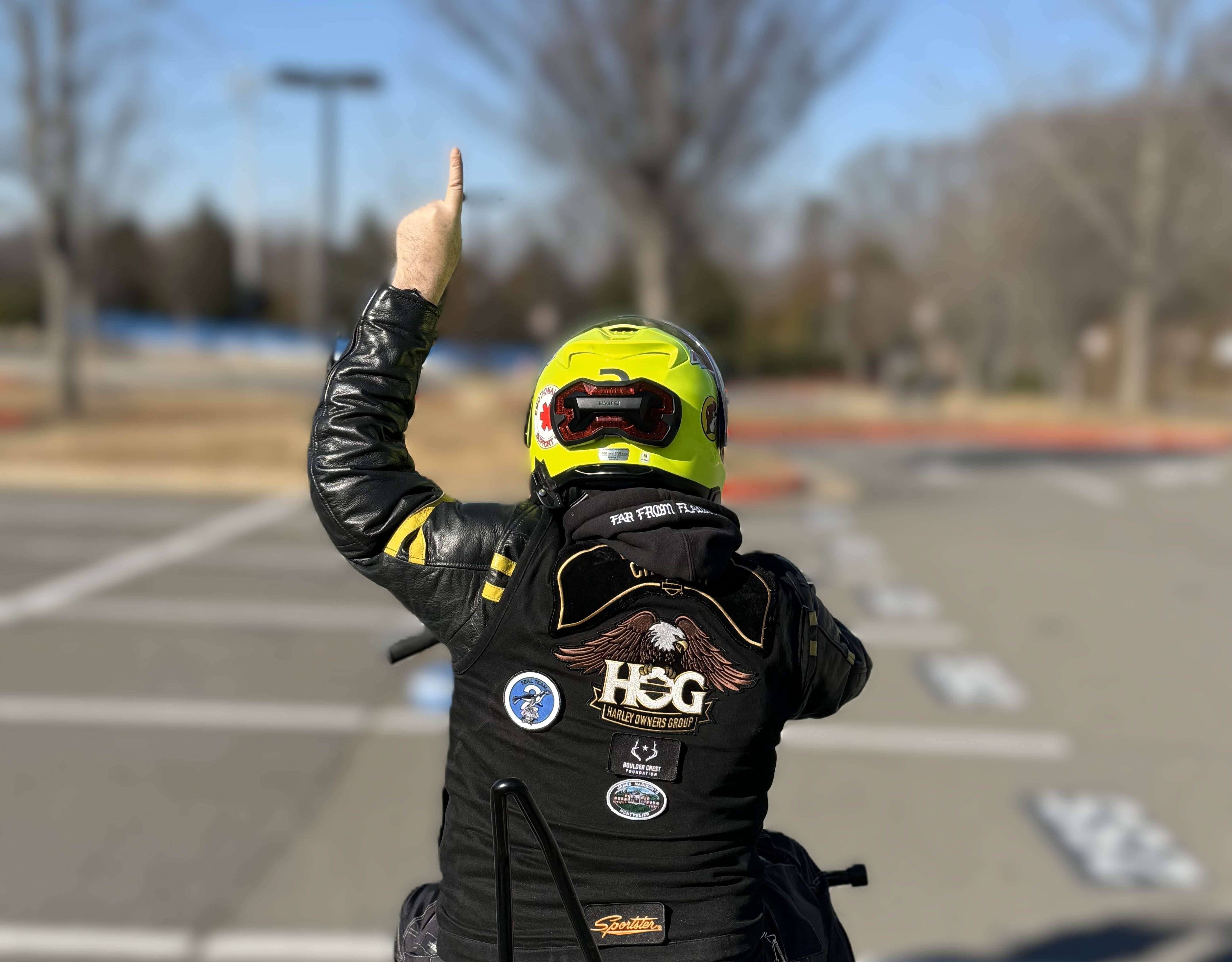
SINGLE FILE FORMATION
Left arm raised straight up from the body with the left hand showing just the index finger extended, slightly over the helmet.
RAILROAD TRACKS \ CROSS-CHANNEL HAZARDS
Left arm extended to the left at a 210° angle from the body with the hand stretched out, palm toward the aft, moving in and out by bending out the elbow at a smooth pace.
RISK IDENTIFIERS
For path-of-travel lane risks, left arm and index finger extended over the head, moving in and out by bending out the elbow at a smooth pace.
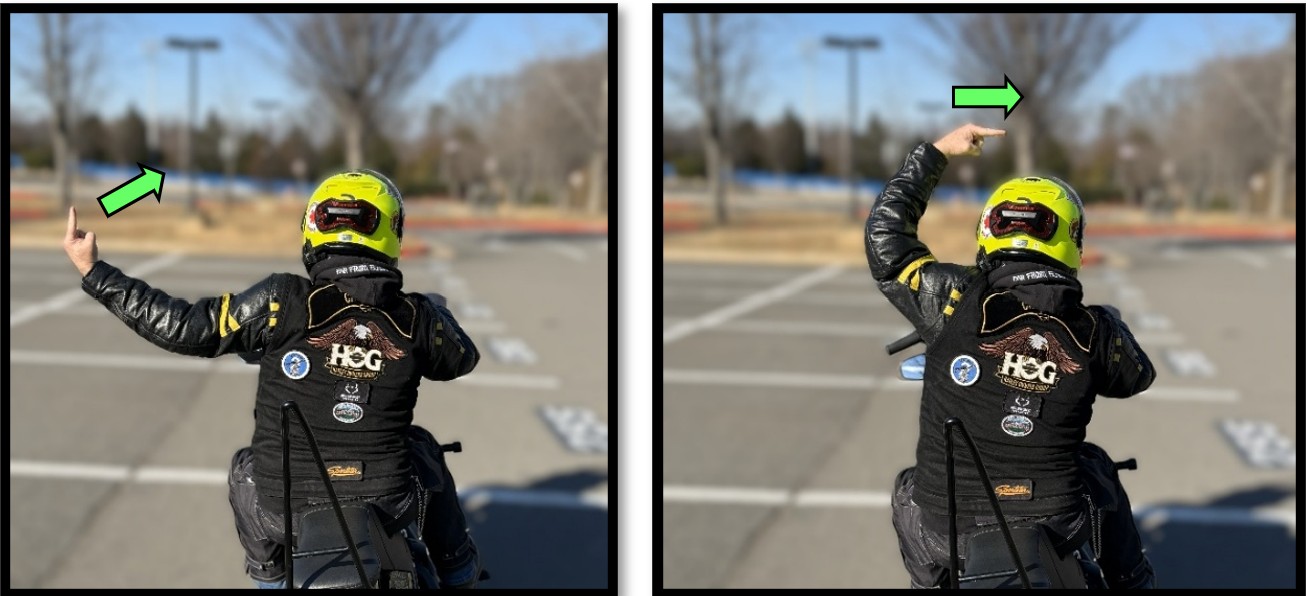
For oncoming lane risks, left arm extended and hand stretched out with fingers together, and arm moving in and out by bending out the elbow at a smooth pace.
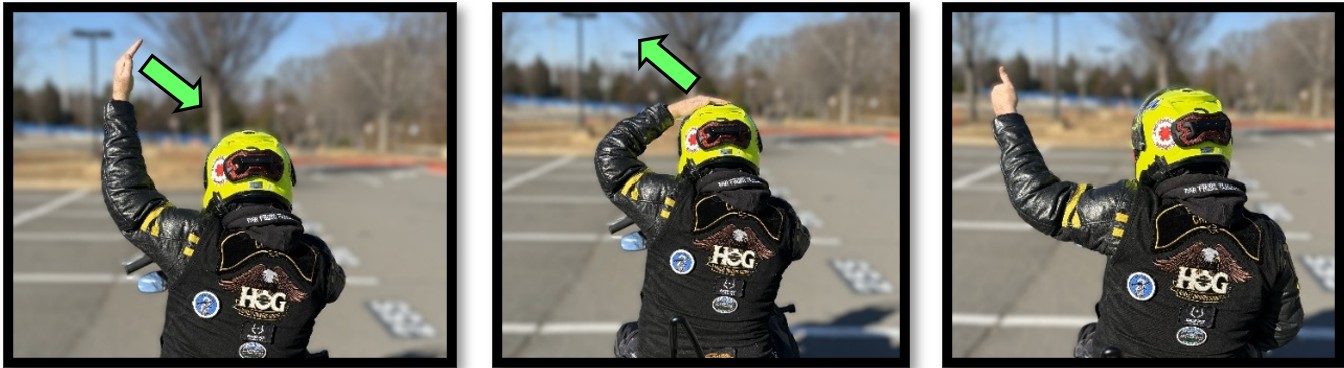
TAP OUT
Raise your arm over your head and tap on your helmet several times.
Regular meetings

Copyright © 2026 - Fairfax Chapter of Harley Owners Group #5395
Privacy Policy